Two printing units
Sequence two colour stations within the glass-printing workflow.
Two print stations for cooktop glass.
Automatic two colour screen printing for cooktops and appliance glass.
This two-colour screen-printing machine is developed for glass cooktops. Two printing units combine servo-operated vertical and conveyor movements with pneumatic squeegee operation and PLC/HMI control.
The published reference covers glass from 150 × 150 mm to a maximum print area of 500 × 500 mm, with a stated glass thickness of 3–8 mm. APL lists approximately 300 pieces per hour for the reference arrangement. Handling can be coordinated with an IR dryer; confirm the complete line sequence and job-dependent output with APL.
Explore the capabilities that shape this machine’s role on your production floor.
Sequence two colour stations within the glass-printing workflow.
Servo drives handle the published up/down and conveyor operations.
A PLC with HMI provides control of the machine sequence.
Discuss manual initial feeding and transfer from the IR-drying stage in the complete arrangement.
| Specification | Reference configuration |
|---|---|
| Printing units | 2 |
| Maximum printing area | 500 × 500 mm |
| Minimum glass size | 150 × 150 mm |
| Glass thickness | 3–8 mm |
| Printing table | 750 × 650 mm |
| Screen frame | 800 × 900 mm |
| Published production rate | Approximately 300 pieces/hour |
| Power supply | 415 V, 3 phase, 50 Hz |
| Power | 3–4 kW |
| Air pressure | 6–8 bar |
| Machine dimensions | 1,950 × 1,300 × 1,800 mm |
Published output figures refer to reference configurations. Actual results depend on material, artwork, process settings and selected options.
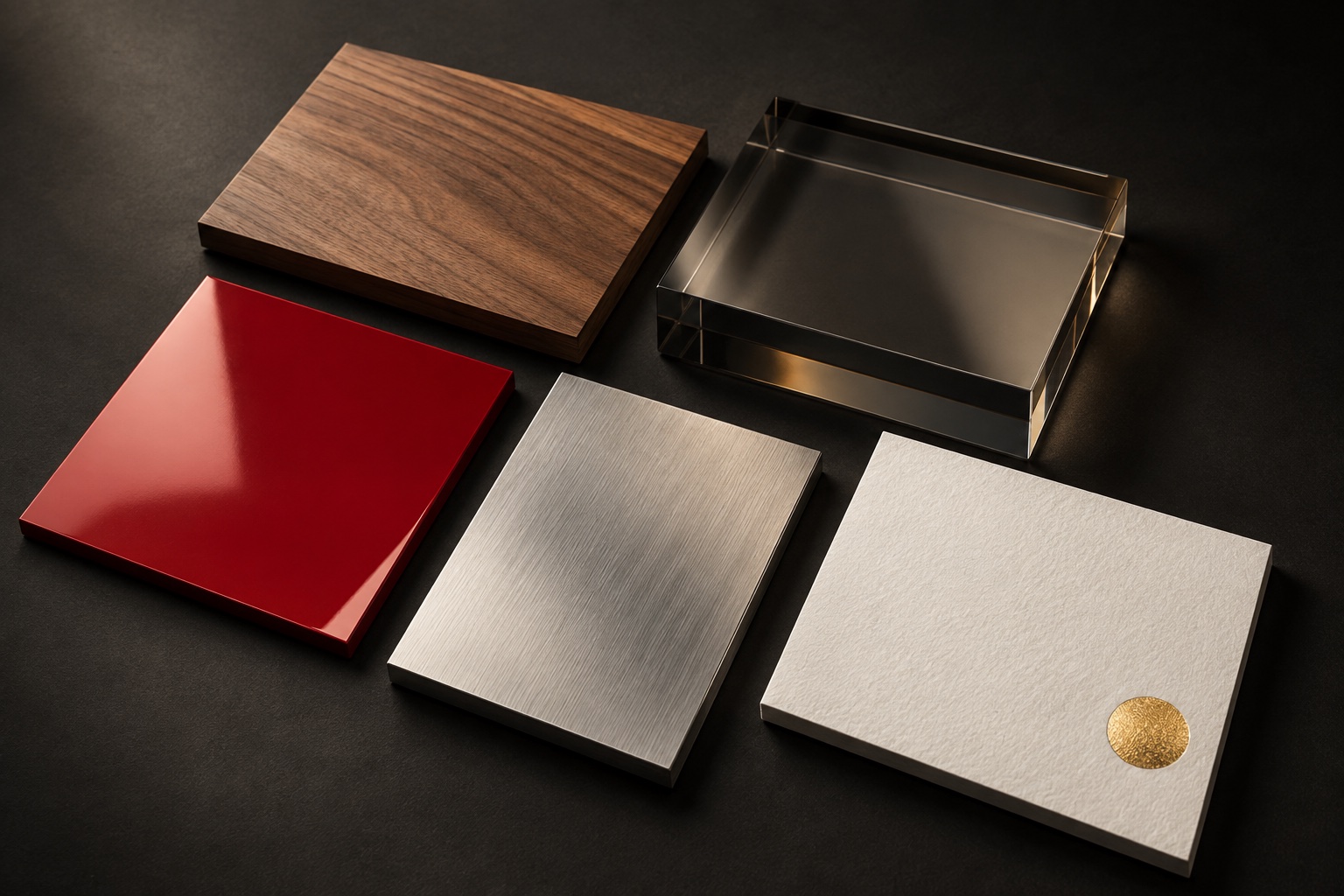 THE MATERIAL IS THE STARTING POINT
Material study shown for illustration. Discuss the actual substrate and intended finish with APL.
Bring these details to your first conversation with the APL team.
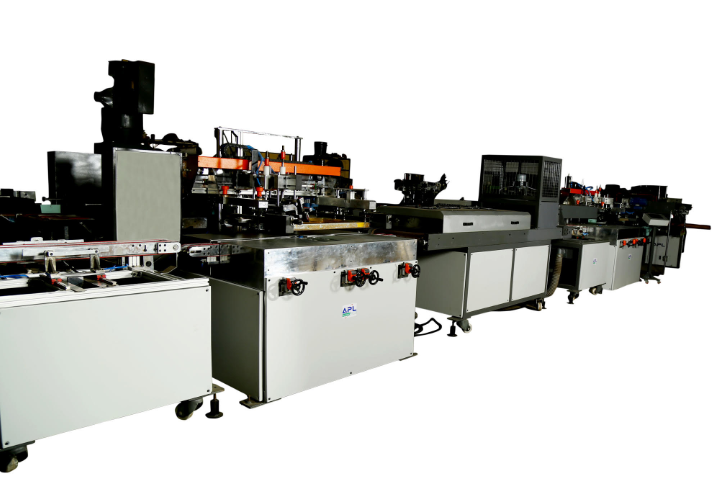
Automatic screen printing with pre-centering and in-machine positioning for automotive and architectural glass.
Explore machine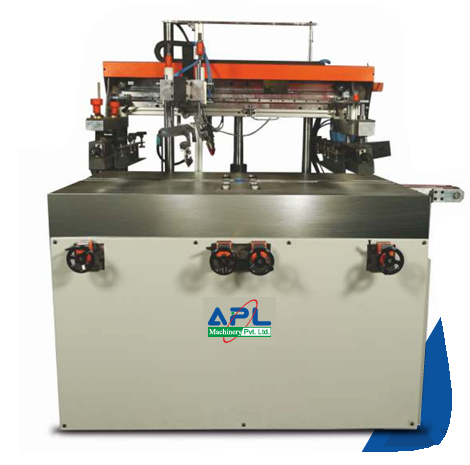
Semi automatic screen printing with automatic glass centering.
Explore machine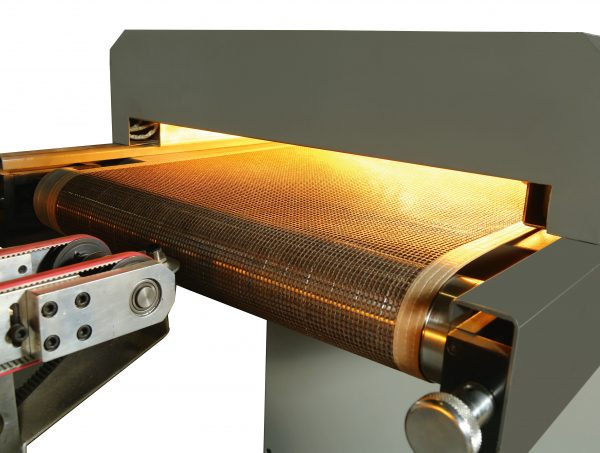
IR drying with automatic hood opening, heat recycling and cooling.
Explore machine